
/
Periodicals
/
Prispevki za novejšo zgodovino
Barbed Wire and the River Kolpa
Intersections of History and Modernity

This work by Saša Hajzler is licensed under Creative Commons Attribution-NonCommercial-ShareAlike 4.0 International
Files (1)
Description
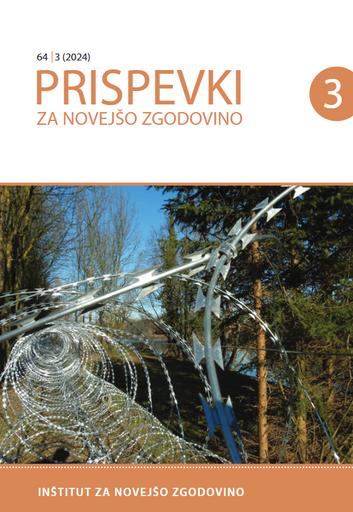
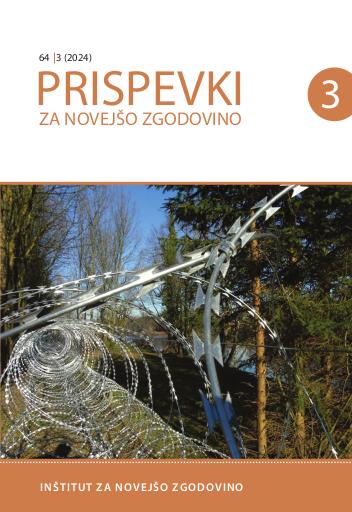
This article presents the empirical fragments pointing to how a more comprehensive set of sources can illuminate the range of interactions that materialise borders beyond their strictly administrative or theoretical understanding. The article specifically examines the transformations of Slovenia’s southern border from 2015 to the present, focusing on its prop-erties and functions in relation to irregular migration. The analysis takes into account not only the physical border (including fences, barbed wire, and other border infrastructure) but also considers the role of the state apparatus through its established institutes of bordering (such as mixed patrols), its administrative-legal aspects ( for example bilateral agreements), and the forced returns and consequential deaths at the border. The anatomy of the border in this section is analysed as a historical and political tool of the EU project by juxtaposing the official institutional discourse and the discourses involving migrants, freedom of movement initiatives, and border forensics. This approach sheds light on the complexity of contempo-rary transformations of Slovenia’s southern border in the context of migration, elaborating on the junction points between various political languages coming from “above” and “below” during the analysed period. By integrating the “from below” perspectives, this article calls for the consideration of a broader methodological apparatus and perspectives that could bring new border historiography insights.
Metadata (13)
- identifierhttps://hdl.handle.net/11686/63351
- title
- Bodeča žica in reka Kolpa
- presečišča zgodovine in sodobnosti
- Barbed Wire and the River Kolpa
- Intersections of History and Modernity
- creator
- Saša Hajzler
- contributor
- Jure Gašparič (gl. ur.)
- Mojca Šorn (ur.)
- Andreja Jezernik (lekt.)
- Studio S.U.R (prev.)
- subject
- slovenska južna meja
- migracije
- mejne tehnologije
- mešane patrulje
- prisilna vračanja
- politike EU
- Slovenia's southern border
- migration
- border technologies
- mixed police patrols
- pushbacks
- EU policy
- description
- Članek temelji na empiričnih fragmentih, ki kažejo na načine, kako bi lahko prebirali celovitejši nabor virov z namenom preseganja striktno administrativnega ali teoretskega razumevanja meja, s tem pa osvetli vrsto drugih interakcij – dejavnikov materializacije meja. Prispevek konkretneje obravnava faze (re)materializacije slovenske južne meje od leta 2015 do danes s pomočjo njenih lastnosti in funkcij v odnosu do iregularnih migracij. Poleg fizične meje, vključno z ograjami, žicami in drugimi mejnimi tehnologijami, v obravnavo vključuje tudi vlogo državnih aparatov – mešanih patrulj, ter klasičnih upravno-pravnih vidikov – bilateralnih sporazumov, zaključi pa s primerom prisilnih kolektivnih vračanj in posledičnih smrti na meji. Anatomija meje je v tej raziskavi analizirana kot zgodovinsko-politično orodje projekta EU, tako da sooči uradni institucionalni diskurz in izkušnjo »od spodaj«. Ta vidik osvetljuje s pomočjo pričevanj ljudi na poti, poročil iniciativ za svobodo gibanja in aktivistično-novinarske mejne forenzike. Omenjeni pristop osvetljuje kompleksnost sodobnih transformacij slovenske južne meje v kontekstu migracij in elaborira stičišča med različnimi političnimi jeziki, ki prihajajo od »zgoraj« in »spodaj« v analiziranem časovnem obdobju. Z upoštevanjem perspektiv »od spodaj« članek spodbuja uporabo širšega metodološkega nabora in perspektiv preučevanja zgodovine meja, ki lahko področju mejne historiografije prinesejo nova spoznanja.
- This article presents the empirical fragments pointing to how a more comprehensive set of sources can illuminate the range of interactions that materialise borders beyond their strictly administrative or theoretical understanding. The article specifically examines the transformations of Slovenia’s southern border from 2015 to the present, focusing on its prop-erties and functions in relation to irregular migration. The analysis takes into account not only the physical border (including fences, barbed wire, and other border infrastructure) but also considers the role of the state apparatus through its established institutes of bordering (such as mixed patrols), its administrative-legal aspects ( for example bilateral agreements), and the forced returns and consequential deaths at the border. The anatomy of the border in this section is analysed as a historical and political tool of the EU project by juxtaposing the official institutional discourse and the discourses involving migrants, freedom of movement initiatives, and border forensics. This approach sheds light on the complexity of contempo-rary transformations of Slovenia’s southern border in the context of migration, elaborating on the junction points between various political languages coming from “above” and “below” during the analysed period. By integrating the “from below” perspectives, this article calls for the consideration of a broader methodological apparatus and perspectives that could bring new border historiography insights.
- publisher
- Inštitut za novejšo zgodovino
- date
- 2024
- type
- besedilo
- identifier
- identifier: COBISS.SI-ID: 217521923
- language
- Slovenščina
- Angleščina
- isPartOf
- rights
- license: ccByNcSa