
/
Periodicals
/
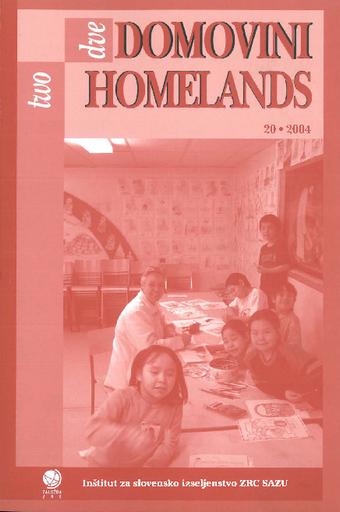
Dve domovini / Two Homelands
Kaj, kako in mogoče še zakaj so tako pisali o izseljevanju in izseljencih iz Beneške Slovenije v časniku Matajur v letih 1951-1960
What, How and Maybe Why They Wrote so About Emigration and Emigrants from Venetian Slovenia in the Newspaper Matajur in the Years 1951-1960
Author(s):Jernej Mlekuž
Co-author(s):Marjan Drnovšek (ur.)
Leto:2004
Publisher(s):Inštitut za slovensko izseljenstvo in migracije ZRC SAZU, Ljubljana
Source(s):Dve domovini, 2004, št. 20
Language(s):slovenščina
Type(s) of material:text
Rights:
This work by Jernej Mlekuž is licensed under Creative Commons Attribution-NonCommercial-NoDerivs 4.0 International
Files (1)

Name:Dve_domovini_20.pdf
Size:92.25MB
Format:application/pdf
Permanent link:https://hdl.handle.net/11686/file5090
Description
The contribution attempts to present the significance a group of “advanced” gathered around the many-years sole newspaper of Julian Slovenes, the Matajur, attributed to emigration - the “number one” phenomenon in the decades after World War Il in Venetian Slovenia. An analysisof contributions from the mentioned newspaper revealed that emigration was in the period 1950-60 a metaphor for exploitation, inequality; it reflected a subordinate, neglected situation of Julian Slovenes and was as such evaluated very negative by writers of the mentioned texts. Yet towards the end of the mentioned period, in “revolutionary iconography” inspired motif ofthe emigrant started appearing, presenting the worker as carrier of the long expected change and new era. The language of power (and resistance), exploitation, differentiation, social inequality and much else interfered in the display of the mentioned social phenomena.
Metadata (12)
- identifierhttps://hdl.handle.net/11686/15205
- title
- Kaj, kako in mogoče še zakaj so tako pisali o izseljevanju in izseljencih iz Beneške Slovenije v časniku Matajur v letih 1951-1960
- What, How and Maybe Why They Wrote so About Emigration and Emigrants from Venetian Slovenia in the Newspaper Matajur in the Years 1951-1960
- creator
- Jernej Mlekuž
- contributor
- Marjan Drnovšek (ur.)
- subject
- Beneški Slovenci
- glasila
- izseljevanje
- Venetian Slovenes
- gazettes
- emigration
- description
- Besedilo poskuša pokazati, kakšne pomene je skupina »naprednih« zbrana okoli dolgo let edinega časnika Beneških Slovencev Matajurja pripisovala izseljevanju - pojavu »številka ena« v desetletjih po drugi svetovni vojni v Beneški Sloveniji. Analiza prispevkov iz obravnavanega časopisa je pokazala, da je bilo izseljevanje v obdobju 1950-60 metafora za izkoriščanje, neenakost, zrcalilo je podrejen, zapostavljen položaj Beneških Slovencev in je kot tako bilo s strani piscev obravnavanih besedil ovrednoteno zelo negativno. Toda proti koncu obravnavanega obdobja se začne pojavljati »v revolucionarni ikonografiji« navdahnjen motiv izseljenca, delavca kot nosilca dolgo pričakovane spremembe in nove dobe. V obravnavo, prikaz obravnavanega družbenega pojava - izseljevanja se je vpletla govorica moči (in upora), izkoriščanja in razlikovanja, družbene neenakosti in še marsičesa.
- The contribution attempts to present the significance a group of “advanced” gathered around the many-years sole newspaper of Julian Slovenes, the Matajur, attributed to emigration - the “number one” phenomenon in the decades after World War Il in Venetian Slovenia. An analysisof contributions from the mentioned newspaper revealed that emigration was in the period 1950-60 a metaphor for exploitation, inequality; it reflected a subordinate, neglected situation of Julian Slovenes and was as such evaluated very negative by writers of the mentioned texts. Yet towards the end of the mentioned period, in “revolutionary iconography” inspired motif ofthe emigrant started appearing, presenting the worker as carrier of the long expected change and new era. The language of power (and resistance), exploitation, differentiation, social inequality and much else interfered in the display of the mentioned social phenomena.
- publisher
- Inštitut za slovensko izseljenstvo in migracije ZRC SAZU
- date
- 2004
- type
- besedilo
- language
- Slovenščina
- isPartOf
- rights
- license: ccByNcNd